Last November, Jack came home from school with one sleeve soaked, a missing glove, and a puffer coat that had somehow collected half a granola bar in its zipper. It looked warm on the hanger, but the stiff fabric made climbing and playground duty miserable. Choosing a boys puffer jacket is less about finding the puffiest coat and more about balancing warmth, movement, washing, and the way your child actually spends a winter day.
Start with warmth and movement
A useful boys puffer jacket should trap warm air without turning your child into a padded toy. That warmth usually comes from synthetic polyester fill, down, or a blend of materials. Synthetic insulation is practical for everyday school wear because it still insulates when slightly damp and generally handles frequent washing better. Down is light and warm for its weight, but it needs more careful washing and loses much of its advantage when wet.
For Portland drizzle, a synthetic option with a water-resistant outer fabric is usually the sensible choice in our house. Water-resistant does not mean waterproof. It can shed light rain for a while, while a waterproof shell with sealed seams is designed for longer exposure. If your child walks to school in heavy rain, think of a puffer as an insulating layer under a rain jacket rather than the only coat.
Fit matters just as much as fill. Try the coat over a sweatshirt, then ask your child to reach forward, raise both arms, and sit down. The hem should cover the lower back without catching under the legs. Sleeves should reach the wrist bone when arms are relaxed, but cuffs should not swallow the hands. A little growing room is helpful; two oversized seasons of fabric around the face and hands is not.

The details that earn their place
When I compare a boys puffer jacket, I look first at the hood. A removable hood is useful for children who switch between school and car rides, while a fixed hood can stay put better in wind. The best version has a soft chin guard over the zipper, because cold metal against the neck is one of those small irritations that can end a morning before breakfast.
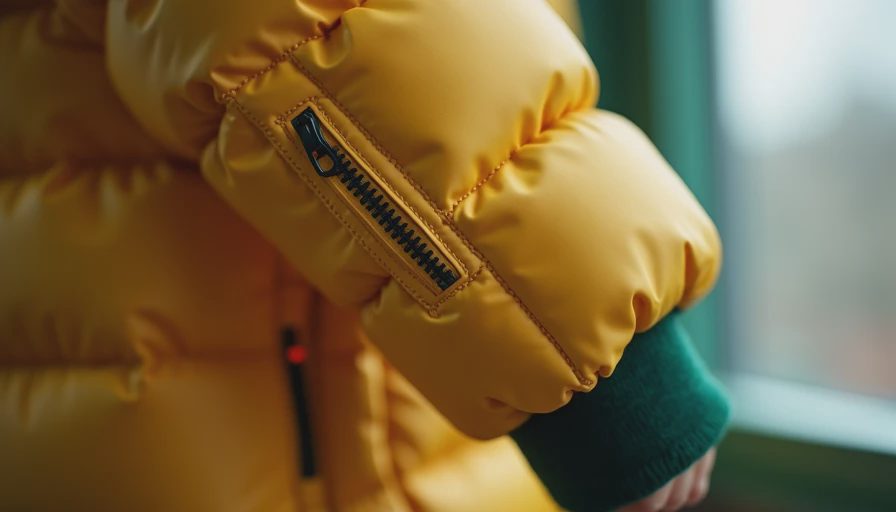
Pockets should be deep enough for a pair of gloves but not so bulky that they pull the coat down. Zippered pockets help with bus cards and small treasures. A smooth main zipper with a large pull is easier for younger children to manage independently, and an elastic or snap cuff keeps drafts out without making the sleeve difficult to put on.
Reflective piping or a bright lining is a useful bonus during dark winter afternoons. It is not a substitute for adult supervision or proper visibility gear, but small design choices can make a child easier to spot near a parking lot. I also prefer a jacket with a simple name label placed somewhere that survives the wash, since classroom coat racks are excellent at creating accidental exchanges.
A boys puffer jacket with a flat, flexible quilting pattern often layers more comfortably than one with very thick horizontal tubes. Bulky sections can bunch beneath a backpack or car-seat harness. Check the care label before buying: some coats can go in a regular washer, while others require a front-loader, special detergent, or air drying.
Synthetic fill, down, and fabric labels
The word “puffer” describes the quilted construction, not one specific material. Polyester fill is made from synthetic fibers and is usually the easiest family choice. It dries relatively quickly, costs less in many styles, and is forgiving when a child drops the coat beside a muddy soccer field. The trade-off is that it can feel heavier or less compressible than down.
Down is made from the soft under-feathers of ducks or geese. It offers excellent warmth with little weight, which is lovely for travel and cold, dry weather. Look for the fill power and the percentage of down versus feathers, but do not treat a higher number as an automatic win for a five-year-old. A well-fitting synthetic coat can be more useful than a premium down coat that gets left at school because everyone is worried about washing it.
The outer fabric is worth inspecting too. Nylon often feels smooth and light, while polyester can be sturdy and affordable. A durable water-repellent finish can help droplets bead on the surface, but finishes wear down with washing. Avoid choosing by the word “eco” alone; read the actual fiber content, lining, insulation, and care instructions.
How to wash a puffer without flattening it
A boys puffer jacket usually needs less washing than a sweatshirt, unless the child has found a puddle. Spot-clean food and dirt first with mild detergent and a damp cloth. When a full wash is needed, close zippers, empty pockets, and follow the care tag. Fragrance-heavy products and fabric softener can leave residue that affects the shell and insulation.
For washable synthetic coats, a gentle cycle and low-temperature drying are often practical. Add a few clean dryer balls if the label permits them; they can help separate clumps as the fill dries. The coat must be completely dry before storage. Damp insulation can develop an unpleasant smell and lose its loft. Never judge dryness only by the outside fabric, because the quilted sections can hold moisture longer than expected.
Down requires more patience. Use a detergent intended for down when the care instructions call for it, and dry on low heat until every section is fluffy. If you do not want that project, choose synthetic insulation. In a household with three children, convenience is not a character flaw; it is part of the garment’s value.
What should you spend?
A dependable boys puffer jacket can cost roughly $30 to $60 at a mass-market retailer, $60 to $100 from a children’s outdoor brand, and more than $100 for technical fabrics or premium down. The lowest price is not always a bargain if the zipper fails in January, while the most expensive coat may offer features your child never uses.
At the budget end, prioritize a washable synthetic fill, secure zipper, comfortable cuffs, and room for one layer underneath. Around the middle price range, you may find better fabric, stronger stitching, a more adjustable hood, and a useful return policy. Premium options make more sense for frequent hiking, long outdoor commutes, or hand-me-down use across siblings.
Check resale groups and end-of-season sales, but inspect secondhand coats carefully. Look for flattened insulation, broken zipper teeth, thinning cuffs, and stains around the collar. A lightly worn coat with sturdy construction can be a better purchase than a new, thin jacket that needs replacing halfway through winter.
My simple family test
Before buying, I ask five questions: Can my child put it on without help? Can the arms move over a backpack? Will it work over a sweatshirt? Can I wash it at home? Would I be comfortable handing it to the next sibling? Those questions remove much of the noise from product pages.
In our spreadsheet, the best-performing outerwear is rarely the fanciest. It is the coat that gets chosen on a wet Tuesday, dries overnight, and still looks presentable after a season of playground slides. A boys puffer jacket should support real life, not create another set of laundry rules.
Would I buy one again? Yes, but I would choose a midweight synthetic style with a removable or well-fitting hood, a chin guard, deep pockets, and enough room for a sweatshirt. For very wet weather, I would add a rain shell instead of expecting the puffer to do two jobs. That combination has kept our children warm, mobile, and much less likely to leave their coat on the classroom floor.



Travellers Write
No letters yet — be the first traveller to write.