The Cup That Changed Everything
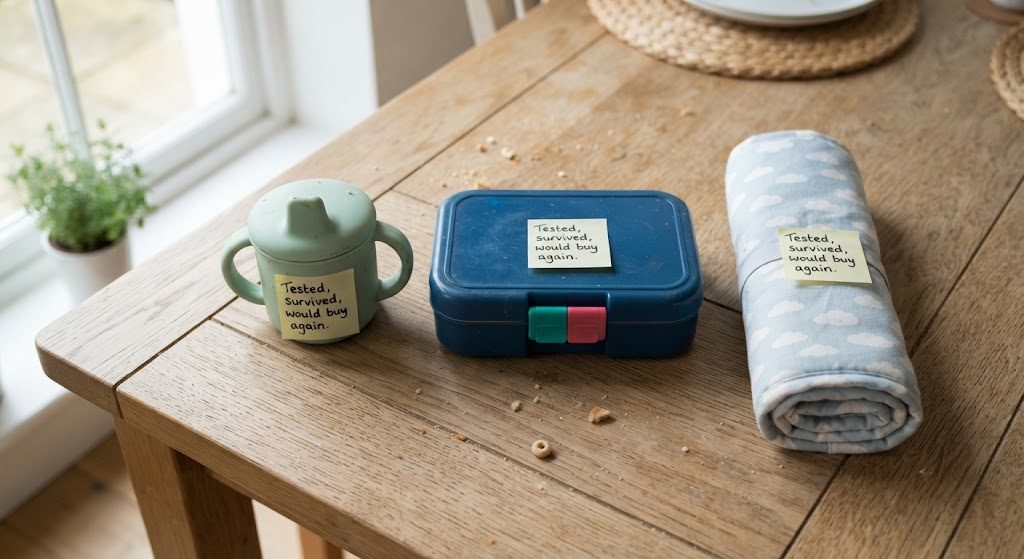
I didn't think a sippy cup could make me angry until the fourth brand leaked apple juice into my diaper bag at the library. By the time Maya arrived, I had tested so many cups, lunch boxes, and nap mats that my spreadsheet had a dedicated "gear" tab. Most of it was forgettable. Three items stood out. They are not fancy, they are not sponsored, and they have all survived at least two children and countless cycles through the dishwasher or washing machine. Here is what actually worked.
Sippy Cups: The One That Doesn't Leak
Between Ella, Jack, and Maya, I bought or received fourteen different sippy cups. They all promised to be leak-proof. Eleven lied. Two were so hard to clean that mold grew in the valve. One survived everything: a silicone-spout cup with a weighted straw, simple screw-top lid, and handles that could be removed once the child outgrew them.
Why It Won
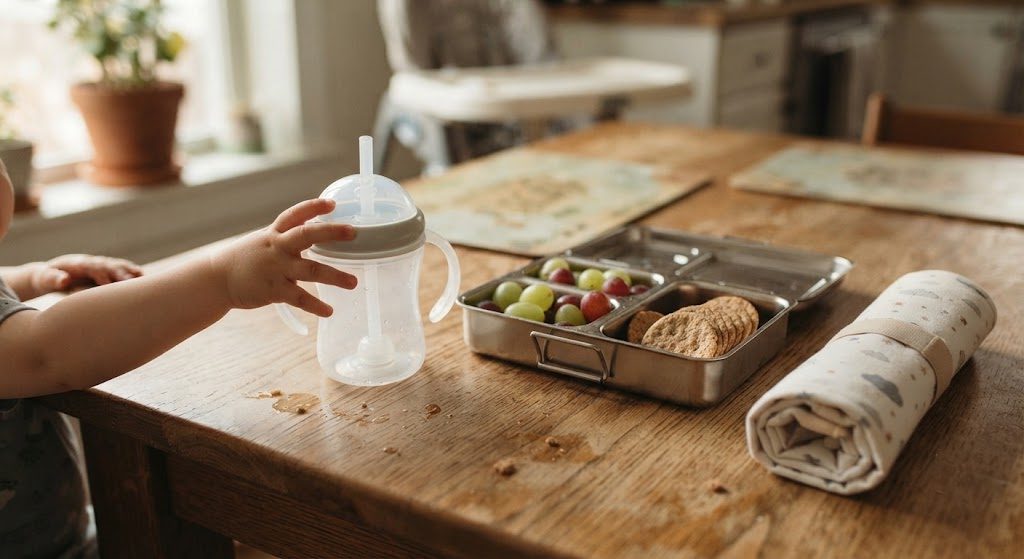
The weighted straw means liquid flows at any angle, which matters for a toddler who drinks while lying on the floor. The silicone spout is soft enough for teething but durable — ours lasted through two kids without cracking. The lid screws on tightly with a square thread that never cross-threaded. The whole thing disassembles into four pieces for cleaning, and every piece survived the dishwasher's heated dry cycle two hundred times. The only downside is that the straw occasionally clogs with smoothie, but a quick rinse fixes it.
What I Avoid Now
I no longer buy sippy cups with complex valves or multiple small parts that trap moisture. I avoid any cup that cannot be fully disassembled. I also avoid hard plastic spouts — they chipped when my kids bit down, and one left a sharp edge. The weighted-straw cup costs about nine dollars and has outlasted every other cup we owned. I bought three across all the kids, and two are still in rotation for Maya.
Lunch Boxes: The Bento That Actually Closes
When Ella started preschool, I sent her lunch in a cute insulated bag with separate containers inside. Everything leaked. Crackers went soggy, yogurt seeped into the grapes, and the bag itself developed a persistent sour-milk smell that never came out. I switched to a stainless-steel bento-style box with a single silicone-sealed lid and never looked back.
What Makes It Work
The single lid seals multiple compartments simultaneously. No individual lids to lose. The silicone gasket is removable for cleaning and has never molded, unlike the rubber seals on cheaper boxes that trapped moisture. The stainless steel is lightweight, doesn't stain from tomato sauce, and doesn't retain odors. The latch mechanism is simple enough that a three-year-old can open it but secure enough that it never popped open in a backpack. The downside: it's not microwave-safe, but I pack cold lunches anyway. The box costs about twenty-five dollars, and after three years of daily use across two kids, the lid still seals perfectly. The exterior has a few dents from being dropped, but that's character.
Nap Mats: The One That Survived Daycare Laundry
Daycare nap mats face a brutal life. They get rolled, unrolled, drooled on, peed on, and washed in industrial machines once a week. The first mat I bought for Ella had a built-in pillow and a fleece lining that pilled into a solid mat of fuzz within a month. The second had a zipper that broke. The third — a simple cotton-covered mat with a removable inner foam pad — lasted through all three kids and is still in Maya's daycare rotation.
The Simple Design That Lasts
The mat has a cotton cover that unzips fully for washing. The inner foam pad is thin but dense, providing enough cushion for a toddler on a hard floor. The attached blanket is a single layer of cotton flannel, not fleece, so it washes clean and dries quickly. The whole thing rolls up and secures with a wide Velcro strap and a carry handle. After fifty-plus industrial washes, the cover is slightly faded, the foam has a permanent crease where it folds, and the Velcro strap has a few loose threads. It still functions perfectly. At thirty dollars, it's the most expensive nap mat I bought, but the only one I didn't replace.
What These Three Have in Common
The products that lasted were not the most expensive, the most heavily marketed, or the ones with the most features. They all shared a design that prioritized cleaning, repair, and simplicity over gimmicks. The cup disassembled completely. The lunch box had a single seal. The nap mat had a removable cover. Every piece that earned a permanent spot in our daily life followed this rule: it must be easy to clean, easy to fix, or easy to replace parts for. Everything else eventually failed.

Travellers Write
No letters yet — be the first traveller to write.