The pair of boys pants that finally broke me had an elastic waist, a cute little cargo pocket, and a knee that turned shiny after three washes. Jack wore them twice before refusing them because the fabric felt stiff. That experience taught me a useful rule: boys pants need to work for sitting, climbing, kneeling, spilling, and growing, not just look tidy on a product page.
I now shop with three questions in mind: Can my child move comfortably? Will the fabric handle a normal wash routine? Can the waist adjust for a real child rather than an imaginary standard-size model? Those questions narrow the field quickly and help us buy fewer pieces that actually earn their space in the drawer.
Start with the right fabric
For everyday wear, cotton twill is one of the most dependable choices. It has a slightly diagonal weave that gives it more structure than jersey without feeling like formal uniform fabric. A pair made with a little elastane, often around 2 to 4 percent, usually bends more comfortably at the knees. The trade-off is that stretchy fabric can lose shape if it is washed hot and dried on high heat every time.
French terry works well for soft pull-on styles. It feels like a sweatshirt on the inside and is comfortable for preschool or travel, but it usually looks more casual and can develop fuzzy wear at the knees. Denim is sturdy, though heavyweight denim can restrict movement for younger children. For toddlers, a lighter denim with a flexible waistband is often more useful than thick jeans that survive forever but sit untouched in the closet.
Read the care label before buying. Cotton-polyester blends often resist wrinkles and dry faster than all-cotton fabric. That can matter in a damp climate or when laundry needs to be ready before school. I do not treat a high cotton percentage as an automatic quality score. Construction, stitching, and a sensible fit matter just as much.
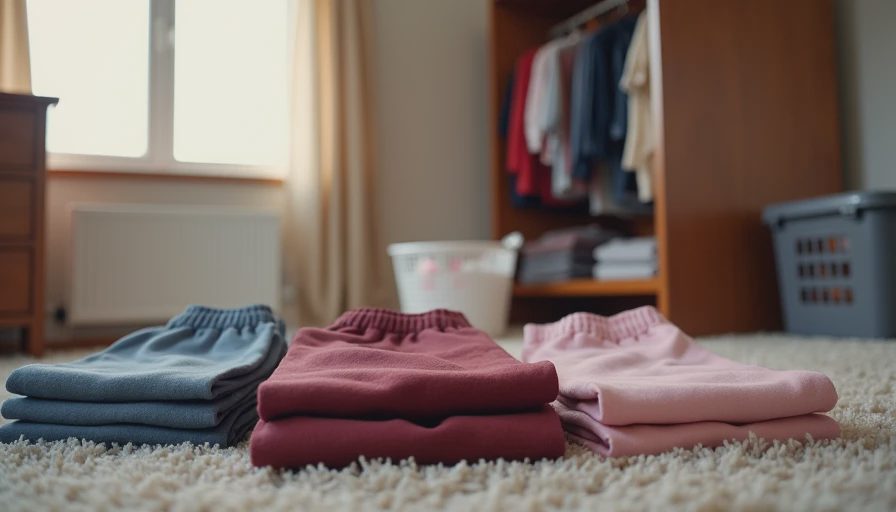
Fit matters more than the size number
Children’s sizing is inconsistent enough that I consider the number on the tag a starting point, not a measurement. Lay a pair flat and compare the rise, waist, inseam, and thigh room with something your child already wears. Two pairs both marked size 6 can differ by several inches in the waist or leg length.
For boys pants, an adjustable waist is especially helpful during growth spurts. Look for a flat elastic band with buttoned tabs or a drawstring that lies comfortably under a shirt. A very narrow elastic can twist in the wash, while a thick external drawstring can annoy a toddler who spends the day on the floor. Check that the buttons are securely attached and that the opening is easy for a child to manage independently.
The seat and thigh should allow a full squat without pulling across the pockets. Have your child bend, sit, and lift one knee when trying on a pair. If the waistband gaps badly when standing but feels tight when sitting, the cut is wrong even if the length looks perfect. Cuffed legs can buy a little time, but do not count on rolling several inches as a long-term solution; bulky folds can catch on playground equipment and quickly lose their shape.
Build a small rotation
A practical wardrobe does not need ten nearly identical pairs. For Ella’s younger brother, I aim for five bottoms in regular rotation: two durable everyday pairs, one softer pull-on pair, one darker option for messy days, and one slightly nicer pair for dinners or school events. In rainy Portland, I sometimes add a quick-drying pair instead of another denim style.
Color also affects how often a garment gets worn. Navy, charcoal, olive, medium denim, and tan hide ordinary playground dust better than pale khaki, though no color hides tomato sauce. A pair with a simple design can work with graphic tees, sweaters, polos, and hand-me-down jackets. I skip decorative cargo pockets when they gape or collect gravel. Real pockets are useful, but extra stitching and hardware create more places for a garment to fail.
When comparing boys pants, consider the whole outfit rather than the isolated item. A soft gray pair might replace sweatpants on school days, while a clean dark chino can cover family photos, parent-teacher meetings, and birthday dinners. That flexibility is usually more valuable than a novelty print that only matches one top.
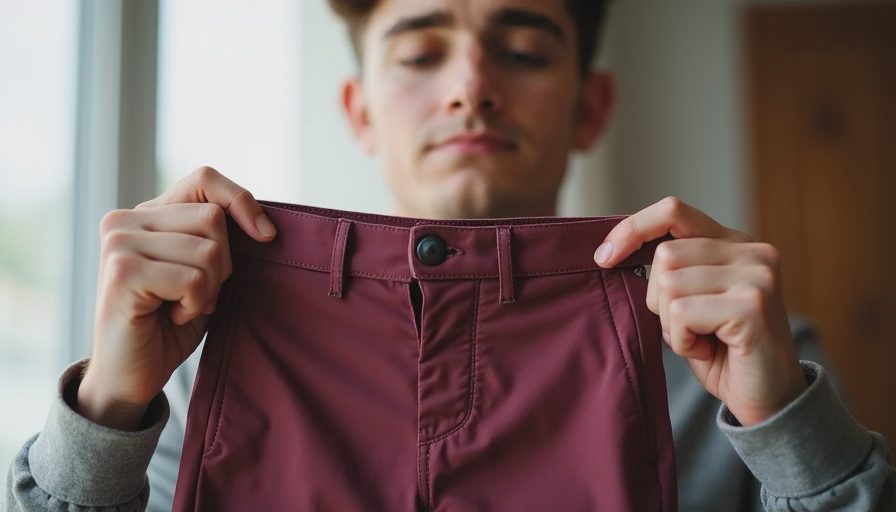
What my wash log has taught me
My spreadsheet tracks price, washes, repairs, and the reason each item leaves the wardrobe. The most common exit is not a dramatic tear. It is a waistband that twists, knees that thin out, or fabric that becomes so stiff a child will not put it on. A $14 pair that remains comfortable for a year can be a better purchase than a $35 pair that looks impressive but gets rejected after two months.
Wash new boys pants inside out when the care label allows it, especially dark denim or printed fabric. Use a moderate amount of detergent; excess soap can leave fibers stiff and attract residue. Close zippers and fasteners before washing so they do not scrape other clothing. Air-drying extends the life of elastic and stretch fibers, but I understand that family laundry is not a laboratory. A short, low-heat dryer cycle followed by hanging is a realistic compromise.
Inspect knees, seat seams, and belt loops every few weeks. Small loose threads are easy to trim or reinforce before they become a split seam. If a child crawls constantly, rotating pairs gives each garment a break and reduces the repeated stress on one set of knees.
Options at different budgets
At a lower price point, look for basic pull-on twill, jersey, or cotton-blend styles from a store with easy returns. These are useful for daycare, art class, and rapid growth, when a garment may only fit for one season. Spend a little more when the cut is unusually good, the waistband hardware feels secure, or the fabric solves a real problem such as frequent outdoor play.
Mid-priced boys pants from children’s basics brands often offer better pattern consistency and stronger knee construction, but do not assume the label guarantees durability. Examine the inside seams and stretch the waistband gently. Premium options can make sense for a small capsule if the fabric is comfortable, the color works with several tops, and the child will wear them repeatedly. I have not personally wash-tested every brand sold online, so I treat product descriptions as clues and look for clear fiber content, care instructions, and customer photos.
A good substitute for expensive specialty trousers is often a simple stretch chino or knit five-pocket style. It gives a neater appearance than sweatpants while preserving the movement children need. For muddy activities, buy inexpensive playwear rather than expecting one beautiful pair to handle every puddle.
A simple buying checklist
Before checkout, check the fiber content, waistband design, rise, inseam, and return policy. Search reviews for comments about pilling, shrinking, twisting elastic, and whether the pockets are functional. Measure your child’s current favorite pair instead of relying on age alone. If the child is between sizes, consider whether the waist or length is the limiting measurement; an adjustable waist can solve one issue, but extra-long legs may create a tripping problem.
When boys pants arrive, try them on before removing tags. Ask the child to sit cross-legged, squat, walk upstairs, and put hands in the pockets. Look for pinching at the waist, a tight seat, or a hem that drags. Wash-test one pair before ordering multiples. That small step has saved me from owning four versions of the same mistake.
Would I buy boys pants again using this method? Yes. The method is less exciting than chasing a perfect brand, but it gives us clothes that fit today, survive ordinary family life, and have a reasonable chance of being handed down tomorrow.
Travellers Write
No letters yet — be the first traveller to write.