The Morning Everything Fell Apart
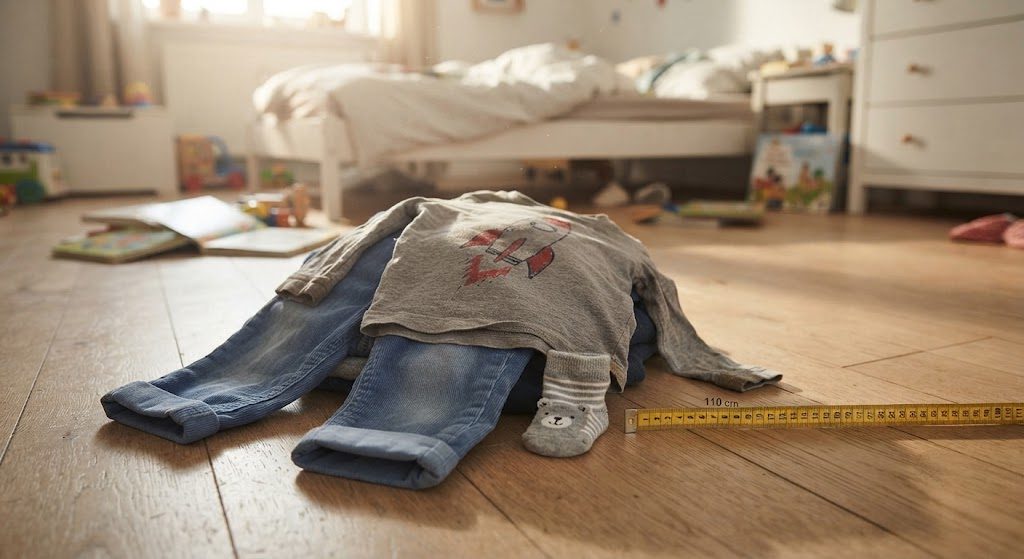
On a Tuesday morning when Ella was 5 and a half, she came to breakfast in her favorite leggings. The waistband dug a red ring into her belly. The cuffs hit mid-shin. She had worn these same leggings comfortably the week before. I blinked, checked the tag, and realized 5T clothes had suddenly become a bad joke. That week, nothing in her drawer fit. Every shirt pulled across her back, every pant looked like she was prepping for a flood. The growth spurt was dramatic, but more than that — her entire body shape had changed. I had been warned about the infant growth curve. Nobody told me about the 5-year-old leap.
Not Just Bigger: The Body Reshapes
Most clothing size charts assume a smooth, steady increase in height and weight. Reality is lumpier. Between 4 and 5 and a half, my kids' limb proportions shifted dramatically. Their legs lengthened faster than their torsos, which meant the 5T shirts still fit around the chest but the 5T pants were suddenly capris. Shoulders broadened, and anything with a narrow back seam pulled tight. The stocky toddler look melted away, replaced by a leaner, more angular frame that demanded a completely different cut of clothes.
The Rise and Fall of Waistbands
At 4, all three of my kids could wear the same adjustable-waist pants. At 5, only Maya still can, and she's just entered this stage. The problem is that a 5-year-old's hip bones begin to emerge, changing the waist-to-hip ratio. Pants that sat comfortably on a soft belly now slide down unless the rise is deep enough. I had to switch from toddler-style elastic backs to more structured pants with a flat front and a real button closure. Even then, the crotch depth needed to be longer. I learned to look for "slim fit" or "straight fit" instead of "relaxed," because the extra fabric bagged at the thighs and caused chafing during play.

The Independence Explosion
Size wasn't the only variable. At 4, I picked the outfits. At 5, Ella had opinions — strong ones. She refused to wear anything with a tag, anything scratchy, anything "too loose" or "too tight," and anything that didn't spin properly when she twirled. The sensory filter kicked in hard. Jack, at 5, refused buttons entirely because he wanted to dress himself quickly at preschool. He also refused jeans because "they don't let me run." I realized that a 5-year-old wardrobe isn't about what fits — it's about what the child will actually wear voluntarily, without a 15-minute morning standoff.
Fasteners and Fine Motor Skills
This was the year I stopped buying clothes with complicated closures. Snaps, small buttons, and tight zippers were all vetoed. I prioritized pull-on styles, wide neck openings, elastic waistbands with faux drawstrings, and sneakers with Velcro. It wasn't laziness; it was about preserving peace and fostering autonomy. A 5-year-old who can dress herself in five minutes is a 5-year-old who arrives at school calm and ready.
The Dress-Up Stage
At 5, clothing became identity. Suddenly, Ella wanted to wear a dress every single day. Not just any dress — the twirliest dress she owned, with a circle skirt that flared perfectly. This phase lasted eight months. I bought two identical dresses in the next size up and rotated them, washing one while she wore the other. The lesson: when a kid attaches to a specific style, buy a backup. It is cheaper than the laundry sprint.
Jack entered a "uniform" phase at 5: joggers and a graphic tee. He wore the same combination with near-religious devotion, changing into the same style of pants and shirts when the dirty ones were in the wash. I learned to buy duplicates of his preferred items in multiples so I didn't have to explain the concept of "the laundry isn't done."
Practical Wardrobe Adjustments
Over two years, I settled on a transition plan for the 5-to-6 age bracket. First, I sized up two full sizes in pants and one size in shirts, because leg growth outstripped torso growth. Second, I embraced the mix-and-match uniform. For Ella, that meant cotton bike shorts under every dress to prevent playground chafing and exposure. For Jack, it meant joggers with reinforced knees, because he wore through the fabric in six weeks flat. Third, I invested in footless tights instead of leggings; they allowed for growth in length without cutting into the waist.
The overarching rule: comfort and self-dressing ability now outweigh aesthetics. A 5-year-old who feels physically comfortable and socially confident in their clothes is a happier, calmer child. That's the true upgrade.


Travellers Write
No letters yet — be the first traveller to write.