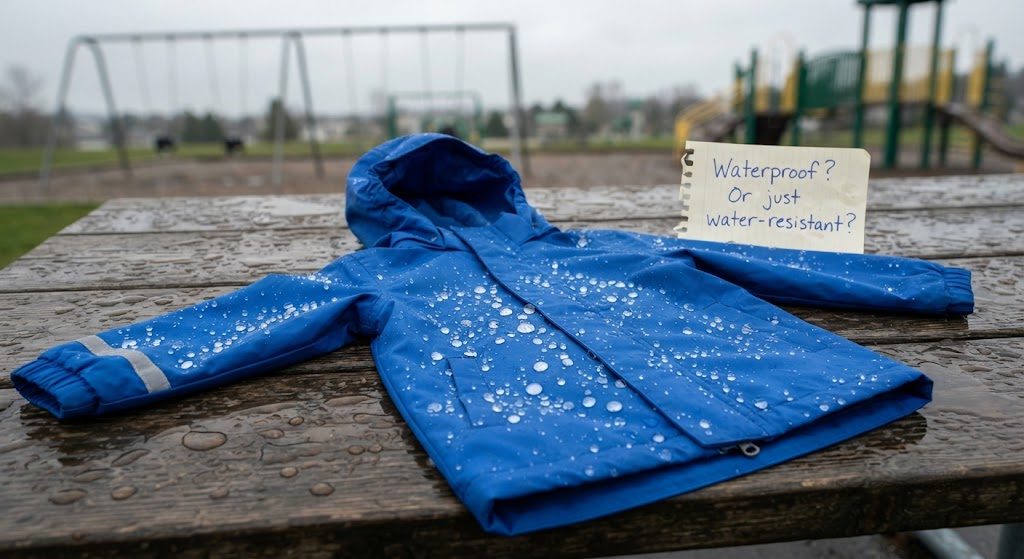
The Puddle That Exposed Everything
When Jack was 3, I bought him a lightweight rain jacket labeled "water-resistant" for a spring camping trip. It drizzled for twenty minutes and he was dry. I felt smug. Then we hit a real Portland downpour, the kind that soaks through denim in ninety seconds. Within ten minutes his sleeves were wet, his shirt was damp, and he was shivering in 55-degree weather. I had confused drizzle-proof with rain-proof. That trip taught me what every parent in a rainy climate eventually learns: water-resistant and waterproof are not the same thing, and the difference matters more than the price tag.
The Definitions That Actually Matter
The outdoor industry uses specific standards, but most kids' clothing brands do not. This is where labels get slippery.
Water-Resistant
A water-resistant garment is treated with a coating that repels light moisture. Think of it as a shield against mist, fog, and maybe five minutes of drizzle. The fabric itself is not sealed. Water-resistant jackets have no taped seams, which means water seeps through the stitching holes first. They work for car-to-door dashes and partly cloudy days. They fail completely at the splash pad.
Waterproof
A waterproof garment uses a membrane or a dense coating combined with fully sealed seams. Water cannot penetrate the fabric even under pressure. This is what you want for real rain, puddle play, and anything lasting longer than a walk to the mailbox. A proper waterproof jacket will have taped seams, a storm flap over the zipper, and a rating measured in millimeters — though that number rarely appears on kids' gear. In my experience, anything with taped seams and a membrane has kept my kids dry for hours.
Coatings vs Membranes: Two Paths to Dry
There are two ways manufacturers make fabric waterproof, and they wear down differently over time.
Coatings
A polyurethane coating is a plastic-like layer applied to the inside of the jacket. It is cheap, effective, and found on most budget rain gear. The downside: coatings crack and peel after repeated washing and folding. My spreadsheet shows coating-based jackets lasting about 30 washes before the shoulders start leaking. They are fine for occasional use but a poor investment for a child who lives in rain boots five months a year.
Membranes
A membrane is a thin, breathable film bonded between the outer fabric and the inner lining. It has microscopic pores small enough to block liquid water but large enough to let sweat vapor escape. This is why membrane jackets cost more and feel less sweaty inside. The membrane itself does not degrade as fast as a coating, but the water-repellent finish on the outer fabric — the DWR — wears off and needs refreshing. I refresh ours twice a season with a spray-on DWR treatment and a low tumble dry.
The Shower Test I Run on Every New Jacket
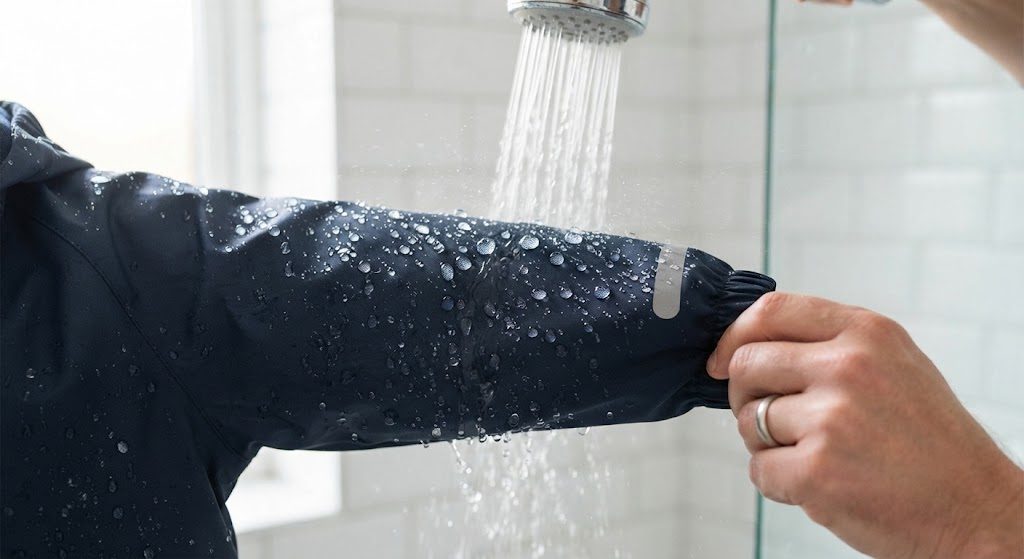
I stopped trusting labels after the camping trip. Now I test every new rain jacket at home before my kid wears it outside. I put the jacket on my child, zip it fully, and run a showerhead over their shoulders for two minutes. If the shirt underneath is wet, the jacket goes back. No tag can argue with a dry t-shirt. This test takes less than five minutes and has eliminated buyer's remorse entirely. I also test after every DWR refresh to make sure the treatment worked.
What I Buy Now and What I Skip
For daily daycare and school, I buy a mid-range membrane jacket with taped seams and a storm flap. It costs between $40 and $65 and lasts two kids if I maintain the DWR. For the car backup bag, I keep a cheap coated rain poncho — it is not breathable, but it works for emergencies and never gets washed. I avoid anything labeled "water-repellent" or "shower-proof" — these are marketing terms with no standard meaning. If the tag does not say "waterproof" and show seam-sealed construction, I assume it will leak.
Travellers Write
No letters yet — be the first traveller to write.