The first mattress I bought for a baby looked wonderfully cozy. It had a plush quilted cover, a little extra padding, and a product photo that made the crib look like a tiny hotel bed. Then I learned that a firm mattress for newborn sleep should not feel cozy in the adult sense. It should be flat, firm, clean, and covered only by a tightly fitted sheet. That change in perspective saved me from buying the wrong thing twice.
For newborns, the sleep surface matters more than decorative details. A properly fitted mattress helps reduce gaps between the mattress and crib, bassinet, or play yard. It also gives your baby a stable surface without extra cushioning that can press around the face. The goal is not a luxurious nursery display. It is a simple sleep setup that follows current safe-sleep guidance.
What “firm” should feel like
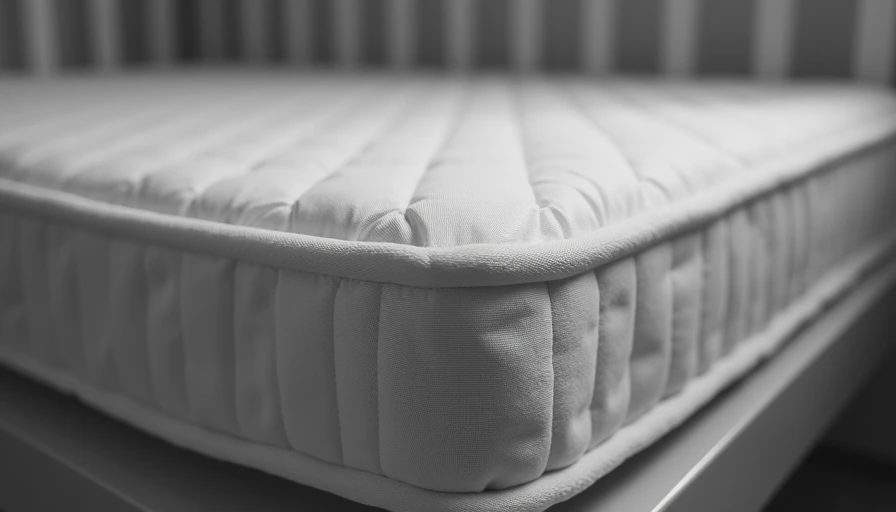
A firm mattress does not sink noticeably when you press your hand into it. If your palm leaves a deep impression, the surface is probably too soft for a newborn sleep space. A crib mattress can still have a little give; it does not need to feel like a hardwood board. What matters is that it quickly returns to shape and keeps a baby’s body from sinking into a hollow.
Look for a mattress specifically made for the sleep product you own. A standard full-size crib mattress is not automatically safe in a mini crib, bedside bassinet, or portable play yard. The dimensions, corners, and thickness all need to match the manufacturer’s specifications. A firm mattress for newborn use should sit flat and should not bow upward at the edges.
When shopping, ignore vague phrases such as “extra plush,” “cloud-like,” or “comfort cushion.” Those descriptions are useful for an adult bed but point in the wrong direction here. Instead, look for a firm, flat infant sleep surface and a cover that can be wiped clean or removed for washing.

Check the fit before the first nap
Fit is easy to check at home. Place the mattress in the empty crib or bassinet, then press it firmly into each corner. There should not be a wide gap between the mattress and the frame. For a full-size crib, the mattress should fit snugly enough that you cannot slide two fingers between the side and the mattress. Always follow the instructions for your particular product because smaller sleep spaces use their own fit requirements.
Also check the thickness. A mattress that sits too high can create a safety problem when the crib mattress is adjusted to a lower setting. The label or instruction manual should state the approved mattress dimensions and maximum thickness. Keep those details with the crib paperwork; they are more useful than a saved social-media recommendation.
A waterproof cover is practical, but it should not turn the surface into a padded topper. Choose a cover made for the mattress, with secure seams and no loose sections. If you use a separate protector, it must fit tightly beneath the fitted sheet. A loose protector can bunch under a baby and change the flatness of the surface.
What belongs in the sleep space
For routine sleep, the safest simple arrangement is a firm mattress for newborn use, one fitted sheet, and the baby placed on their back. Keep pillows, quilts, blankets, stuffed animals, bumpers, wedges, and sleep positioners out of the crib or bassinet. A wearable blanket can provide warmth without placing loose bedding around the baby, provided it fits correctly and is appropriate for the room temperature.
An adult mattress, couch, recliner, nursing pillow, or soft lounger is not a substitute for a dedicated infant sleep surface. These items can look convenient during a late-night feeding, but they are not designed to maintain the same clear, flat setup. If you fall asleep while feeding, move the baby to the approved sleep space when you wake.
Avoid products that promise to prevent spit-up by raising one end of the mattress. Newborns should sleep on a flat, noninclined surface. An incline can allow a baby’s head to fall forward, which can interfere with breathing. If reflux is worrying you, talk with your pediatrician rather than adding a wedge or rolled towel.
Materials without the marketing fog
Foam, fiber, and innerspring mattresses can all be made for infant sleep. Foam is often lighter and easier to lift during sheet changes. Innerspring models may feel more substantial and can cost roughly $80 to $200, while basic foam options often fall around $50 to $150. Price alone does not prove that one is safer.
Pay attention to construction instead. A useful mattress has a stable core, a firm surface, strong edge support, and a cover that does not tear after ordinary cleaning. Some parents prefer a dual-sided model with an infant side and a toddler side. That can be convenient, but the newborn side still needs to meet the instructions for the crib and the product’s safety requirements.
Organic cotton covers, low-odor foam, and recycled fibers are personal preferences, not replacements for correct fit and firmness. I like washable covers because newborn leaks are not theoretical; they happen at 2 a.m. But I would choose a plain, well-fitting mattress over a premium fabric cover on a poorly matched one.
A practical buying checklist
Before ordering, write down the exact name and model of your crib, bassinet, or play yard. Then compare its manual with the mattress dimensions. Confirm that the mattress is intended for infant sleep, not simply described as comfortable for babies. Check the return policy so you can test the fit before washing the cover or throwing away the packaging.
When it arrives, inspect the seams, corners, zipper, and surface. Let a new mattress air out according to the manufacturer’s directions, especially if it has a noticeable factory odor. Do not cover that smell with an additional pad. Put the mattress in place, test the fit on all sides, and use only the sheet made for that mattress size.
A five-minute monthly check is worthwhile. Look for sagging, bent edges, torn fabric, broken fasteners, or a cover that has shrunk. Replace a mattress after significant damage, contamination that cannot be cleaned, or a change in sleep product. A hand-me-down can be sensible when its history is known and its condition is excellent; mystery mattresses are harder to evaluate.
What I would buy again
My pick is a straightforward firm mattress for newborn sleep with a snug fit, a washable waterproof cover, clear dimensions, and no unnecessary cushioning. I would spend about $60 to $120 for a dependable basic model, then put the savings toward a second fitted sheet and a properly sized wearable blanket. A higher-priced mattress can be reasonable if it solves a real problem, such as easier cleaning or a verified fit for an unusual bassinet, but luxury materials are not required.
Would I buy a firm mattress for newborn use again? Yes, but I would buy it after measuring the sleep space, not after admiring the nursery photograph. The best setup is usually the least complicated: firm surface, flat position, tight sheet, empty sleep space, and baby placed on their back. If you want to compare options, start with those requirements and let the marketing extras come last.


Travellers Write
No letters yet — be the first traveller to write.