The first mattress I bought for our nursery looked beautiful in its box and smelled strongly of new foam for days. That was enough for me to start comparing the best nursery mattress options more carefully. A crib mattress is not a decorative purchase, and it does not need the longest list of features. It needs to fit the crib properly, stay firm, clean up easily, and hold up through leaks, spit-up, and midnight sheet changes.
What matters most in a nursery mattress
The best nursery mattress is firm and flat, with no deep quilting, pillow-top surface, loose padding, or visible sagging. A baby’s sleep surface should not feel like an adult bed. Press the center and edges with your hand before buying; the mattress should resist pressure and return to shape quickly rather than forming a soft dip.
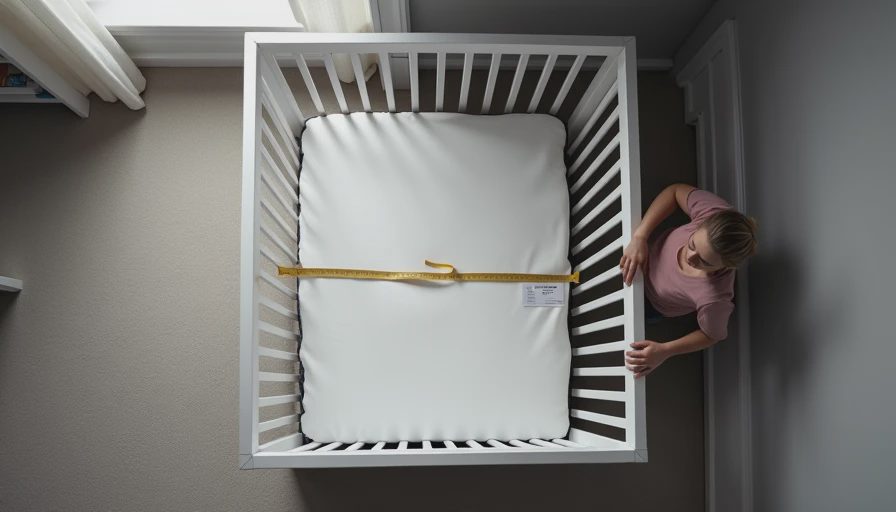
Fit comes next. A standard full-size crib mattress should sit tightly inside the crib, with no meaningful gap around the sides. If you can fit more than two fingers between the mattress and the crib frame, stop and recheck the size. Measure the crib interior, read the mattress dimensions, and do not assume every “standard” product is identical. Mini cribs and portable cribs require their own mattress size.
Look for a product that meets current federal crib mattress requirements and has clear manufacturer instructions. Those rules address dimensions, labeling, flammability, and other performance details, but they do not tell you which surface will be easiest to live with. That is where materials, cover design, and your laundry tolerance matter.
Foam, innerspring, or natural materials?
Foam mattresses are usually light and easy to lift during sheet changes. A basic polyurethane foam model can cost about $50 to $100, while a dual-sided or higher-density version often costs $100 to $200. Check the weight and construction rather than treating a heavier mattress as automatically better. Some foam can compress over time, especially if it is stored poorly or used after visible damage.
Innerspring mattresses use steel coils surrounded by padding and often feel sturdy. They can weigh 15 to 25 pounds, which is noticeable when you are changing bedding at 2 a.m. Prices commonly range from $80 to $250. They are a sensible choice if you prefer a traditional structure, but inspect the edge support and cover seams carefully.
Natural latex, cotton, wool, and plant-based materials appear in premium products from companies such as Naturepedic, Avocado, and My Green Mattress. These options can cost $200 to $400 or more. “Natural” describes materials, not a guarantee of comfort, safety, or easy cleaning. A parent who wants the best nursery mattress at a lower price can choose a firm, well-made foam or coil model and spend the difference on two waterproof covers.
The cover is where daily life happens
A mattress can have excellent internal construction and still be frustrating if its cover absorbs every spill. A waterproof cover with sealed seams is usually the most practical feature for a nursery. Some covers use vinyl, polyethylene, polyester, or a blend of fabrics. Read the care instructions and check whether the cover is removable, machine washable, and replacement-compatible.
I would rather have a plain mattress with a reliable waterproof surface than a luxury model with a beautiful, non-washable cover. Never add a separate topper, cushion, memory-foam pad, or thick mattress pad to make a crib mattress softer. Use only a fitted sheet designed for that specific mattress, and replace a sheet that has stretched, torn, or no longer stays tight.
A simple two-cover setup saves time. Put the mattress protector over the mattress, add the fitted sheet, then keep a second protector and sheet folded nearby. If there is a leak, you can remove the top layer and make the crib promptly instead of searching through a linen closet with a tired baby in your arms.
How to compare popular price points
At the entry level, the best nursery mattress may be a $50 to $90 foam model with a washable waterproof cover and a precise fit. These mattresses are practical for a family watching spending, and a lower price does not automatically mean poor construction. Look for a smooth, firm surface and straightforward product information.
In the middle range, around $100 to $200, you will find thicker covers, dual-stage firmness, coil construction, and lighter designs. A dual-sided mattress usually has one firmer infant side and one slightly different toddler side. That can extend its useful life, but only use the side intended for your child’s age and follow the instructions.
Premium mattresses often add organic textiles, specialty fabrics, reinforced edges, or more detailed certifications. Those features can be worthwhile for a family with particular material preferences, but they are not a substitute for correct fit and firmness. Brands such as Newton emphasize breathable construction, while Naturepedic offers several waterproof and organic-material approaches. I have not personally sleep-tested every model, so treat brand features as starting points and read the current specifications before ordering.

A practical buying checklist
Before adding the best nursery mattress to your cart, measure the crib or bassinet twice. Confirm the product dimensions, weight, return policy, warranty, and delivery packaging. If it arrives rolled or compressed, follow the manufacturer’s expansion instructions and do not use it until it has fully regained its intended shape.
Run your hand across the surface for lumps, hard ridges, exposed stitching, or a dip. Check every seam on the waterproof cover. Read the cleaning section before purchase; “wipe clean” is very different from “machine washable,” and neither means the entire mattress can be soaked.
Skip used mattresses when you cannot verify its age, storage history, cleanliness, and condition. A secondhand crib may be useful if it is sound and compliant, but a mattress is harder to evaluate after years in a basement, garage, or damp nursery. Also avoid products with recalls or missing labels. Registering a new mattress, when that option is offered, makes recall notifications easier to receive.
My final nursery-mattress test
Place the mattress in the crib and check all four corners. Try to slide it sideways; it should not move freely. Fit the correct sheet and make sure it stays taut after you pull gently at the edges. Then remove the sheet and inspect whether the cover has shifted or bunched underneath.
For our family, the best nursery mattress would be firm, uncomplicated, waterproof, and light enough that Tom or I could lift it without a wrestling match. I would choose a mid-priced model with a dependable cover over a premium mattress that requires special care. Spend more if a specific material or construction solves a real problem, not because a glossy label makes bedtime sound easier.
My verdict is simple: the best nursery mattress is the one that fits the crib exactly, stays firm and flat, and lets you handle ordinary messes without drama. Compare a few trusted options, keep the return policy in view, and choose the surface you can maintain consistently. That is a calmer purchase for the nursery and for the parent changing the sheets.



Travellers Write
No letters yet — be the first traveller to write.