The Question My Spreadsheet Had to Answer
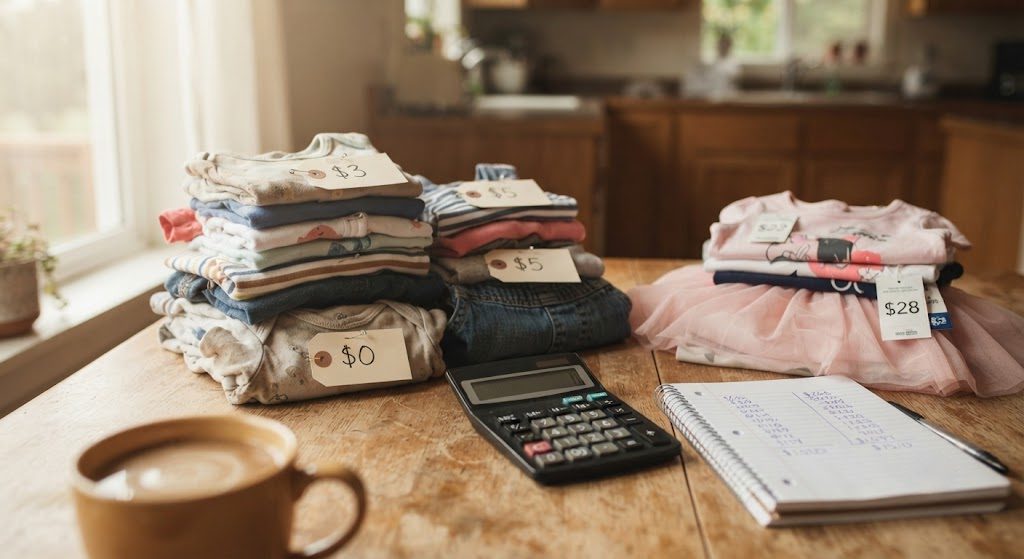
When I was pregnant with Jack, I calculated that we'd save a fortune using Ella's old clothes. By the time Maya arrived, I was less sure. The bins in the basement multiplied. The time spent sorting, refreshing, and negotiating with children who wanted their own things added up. I wanted a real answer: was I actually saving money, or just trading money for effort? So I turned to my spreadsheet, which by then had over 1,500 entries with purchase prices, washes survived, and which kid wore each piece. The numbers surprised me.
The Gross Savings: What the Bins Saved Us
Between Ella's first year and Maya's current wardrobe at age 2, I counted every piece that was worn by at least two kids. Bodysuits, sleepers, jackets, rain gear, sweaters, tops, bottoms — everything except shoes, which we always buy new. The total replacement cost if I had bought each item new for each child at similar quality levels came to approximately $2,800 across the three kids. The actual cash I spent on those pieces for Ella originally was about $1,100 — a mix of new purchases and gifts. So the raw savings from reusing instead of rebuying was around $1,700. That felt like a win.
The Hidden Costs I Did Not Expect
But that $1,700 wasn't pure savings. Storing clothes for two to four years between kids required bins, vacuum bags, and a corner of the basement that could have held something else. I spent roughly $80 on storage supplies. More significant was the time cost: I estimated I spent four to six hours per season pulling out bins, trying garments on the next kid, washing items that had absorbed basement smell, and repairing or retiring pieces with failed elastic. At minimum wage, that's maybe $300 of my time per year — over three years, that's close to $900. Then there were the hidden replacements: items that technically fit but were too stained, too worn, or too "Ella" for Jack to accept, which forced me to buy new versions anyway. Those "gap-filler" purchases came to about $240 across all three kids.
Sibling Sentiment: The Cost No Spreadsheet Can Measure
Money aside, the emotional math is real. Ella is now 7 and aware of which items were hers. She rarely minds, but when she saw Maya wearing a dress she remembered loving, she asked quietly, "Can I have that back when Maya's done?" It was a small moment, but it reminded me that hand-me-downs aren't just inventory — they carry memory. Jack, at 5, has occasionally asked why he doesn't get new pants "like his own." I've learned to save a small budget for each younger child to pick a few brand-new pieces, purely for emotional equity. Those "choice purchases" cost about $50 per kid per season but buy immense goodwill.
The Final Verdict: Yes, But With Guardrails
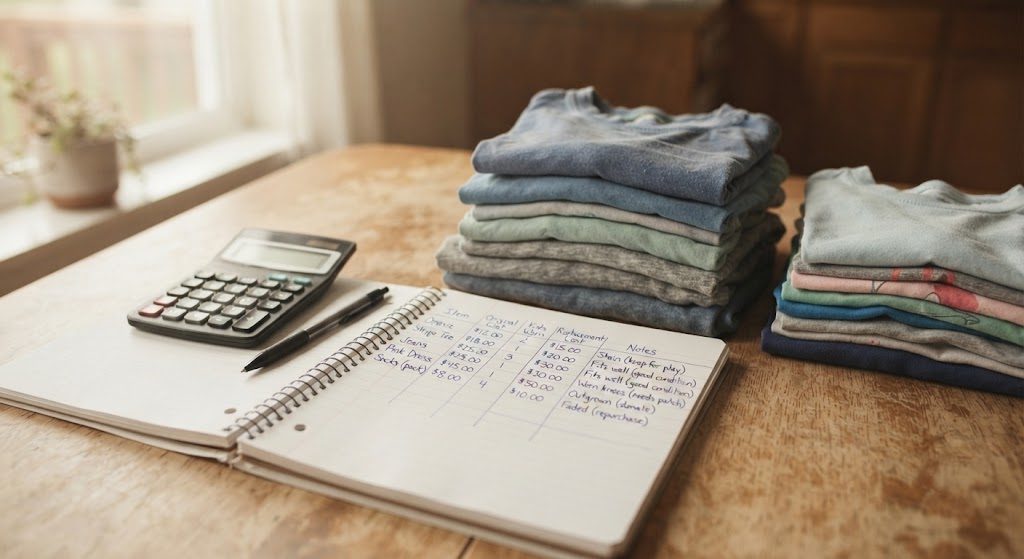
After subtracting storage, time, gap-filler purchases, and emotional equity buys, the net savings across three kids comes to roughly $1,100 over five years. That's about $220 per year — not nothing, but not the massive fortune I imagined. The real benefit, I've concluded, is not just financial. Hand-me-downs force me to be intentional. I buy better quality for the first child because I know the garment will face a second and third life. They reduce waste. And they create a small, sweet continuity between siblings — a striped onesie that warmed Ella, then Jack, then Maya, becoming a tiny family artifact. That's worth more than the $1,700.
I still do hand-me-downs. I will keep doing them. But I no longer pretend they're free, and I give myself permission to donate anything that doesn't fit, doesn't feel good, or doesn't spark a "yes" from the next kid. The math works when you let it be imperfect.


Travellers Write
No letters yet — be the first traveller to write.