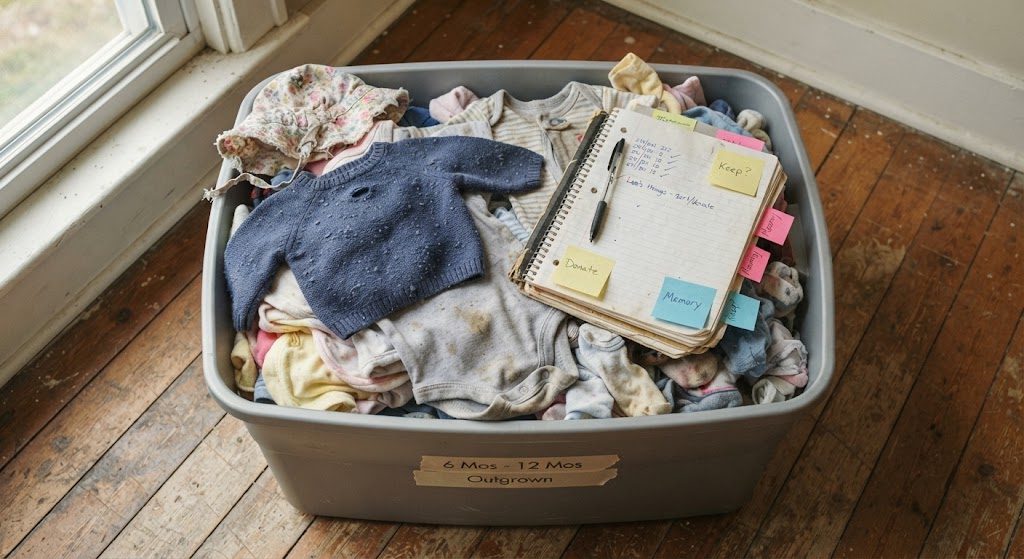
The Bin Under the Stairs
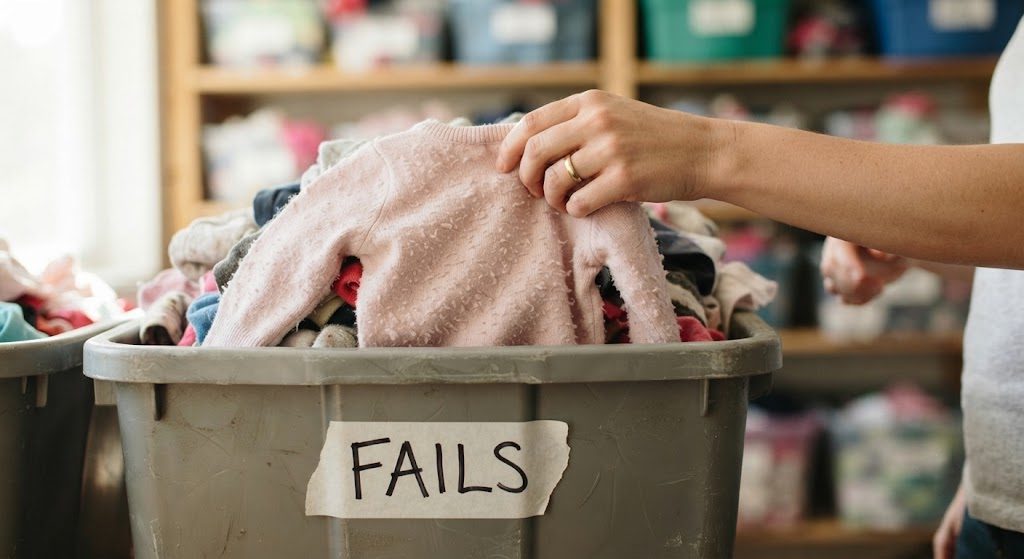
It lives in our basement storage closet, an unremarkable gray plastic bin with a cracked lid. The label on the side — scrawled in sharpie — says “FAILS.” Inside are roughly 90 children’s garments that didn’t survive our family of five. I started collecting them when my oldest, Ella, was 2, right after I pulled a $42 organic cotton sweater out of the wash and saw it was already covered in little fuzz balls. I was furious. I was also confused. How could something labeled “100% cotton” disintegrate so fast while a $6 thrift-store sweatshirt from a brand I’d never heard of held its shape for two years?
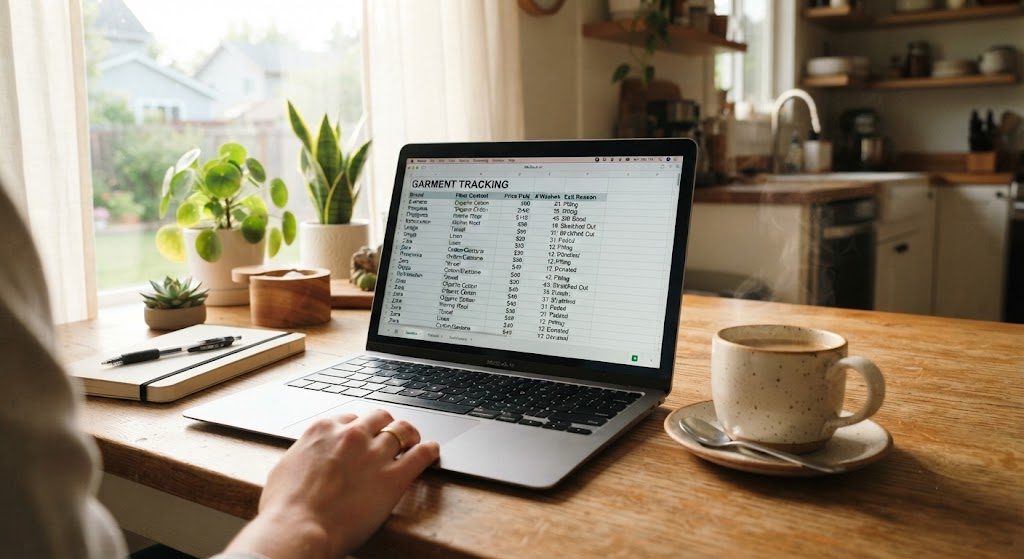
I needed answers, not marketing copy. So I did what any slightly obsessive parent with a background in spreadsheets would do: I started logging. Every new piece of clothing that entered our house got a row — brand, fiber content, price paid, number of washes before visible wear, and the final “exit reason”: outgrown, stained beyond saving, pilly, holey, or – the saddest category – “lost interest” (because a tulle skirt that scratches never stood a chance).
The Spreadsheet That Changed Everything
Three years in, my spreadsheet had over 500 entries. Patterns leapt off the screen. Double-layer reinforced knees in leggings? Almost always worth it. Supima cotton onesies? Held color and shape far longer than standard cotton. That expensive “eco” bamboo romper my aunt gifted us? Pilled on wash number two because bamboo viscose is actually a fragile semi-synthetic, no matter how soft it feels. I had stumbled onto the real difference between marketing and material science, and I wanted to share it.
I call the bin my “library of failure” because every sad little shirt in it taught me something. The bunched-up elastic taught me that cheap waistbands lose stretch faster than flat-knit ones. The sun hat with a broken strap taught me that a toggle adjuster beats velcro every single time. The stained bib taught me that silicone is not always easier than fabric – not when your toddler figures out how to yank it off and fling pureed pumpkin across the kitchen.
My goal now isn’t to never buy anything that fails. It’s to fail less often, and to help other parents do the same. I’ll never tell you to throw out your kid’s favorite sparkle tee just because it’s polyester. But I might show you why that tee pills faster than a cotton blend, and what to look for next time you’re in the store.
What This Blog Is (and Isn’t)
Everyday Little Ones is not a place for “must-have” lists that change with the season. It’s not a guilt machine disguised as a “clean living” guide. You won’t find me implying you’ve harmed your child because you bought a cheap snow bib at Target. What you will find: honest explanations of fiber properties, how to interpret care labels, real-weather outfit tests, hand-me-down strategies that respect sibling personalities, and product picks that come with a “would I buy it again?” answer — always yes, no, or maybe.
I still have that spreadsheet. It’s approaching 2,000 rows now, spanning three kids from newborn to age 7. I hope this blog becomes the friendly, practical resource I once desperately needed — a place where we can talk about clothes the way we talk about parenting with our wisest friend: calmly, clearly, and without judgment. Welcome to my library of failure. I’m so glad you’re here.


Travellers Write
No letters yet — be the first traveller to write.