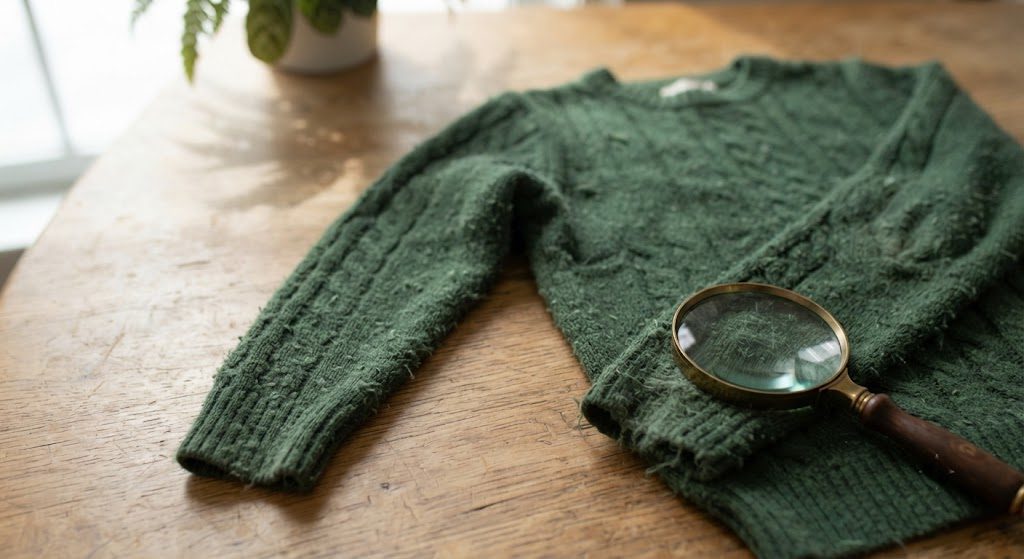
The Sweater That Started It All
It was a creamy oatmeal crewneck, size 3T, bought on sale for $34. The tag read "100% Organic Cotton" in a soft serif font. I folded it carefully, washed it in cold water, laid it flat to dry — and pulled it out three cycles later looking like it had aged five years. Ella wore it exactly twice. The sweater went straight into my fail bin, and I went straight to the internet to figure out why.
What I learned changed how I shop for every piece of kids' clothing. The phrase "100% cotton" tells you almost nothing about durability. Pilling is rarely about how you wash; it's about the fiber, the yarn, and how tightly the fabric was knit — decisions made months before you ever touch the garment.
The Real Cause of Pilling: Three Factors
Pilling happens when short, loose fibers on the surface of a fabric tangle together under friction — from a car seat strap, a backpack, the rough-and-tumble of the playground. Those little balls are knots of broken fibers that didn't have enough strength or length to stay anchored in the yarn. Three invisible factors determine whether your kid's sweater will pill.
Fiber Staple Length
Cotton fibers come in different lengths, called staple lengths. Long-staple cotton — like Supima or Egyptian cotton — uses fibers measuring 1.25 inches or longer. Short-staple cotton, the kind used in most budget garments, uses fibers under 1.1 inches. Longer fibers mean fewer exposed ends, less shedding, and far less pilling. That $34 organic cotton sweater was made with short-staple organic cotton. It was certified organic, but it was also structurally doomed.
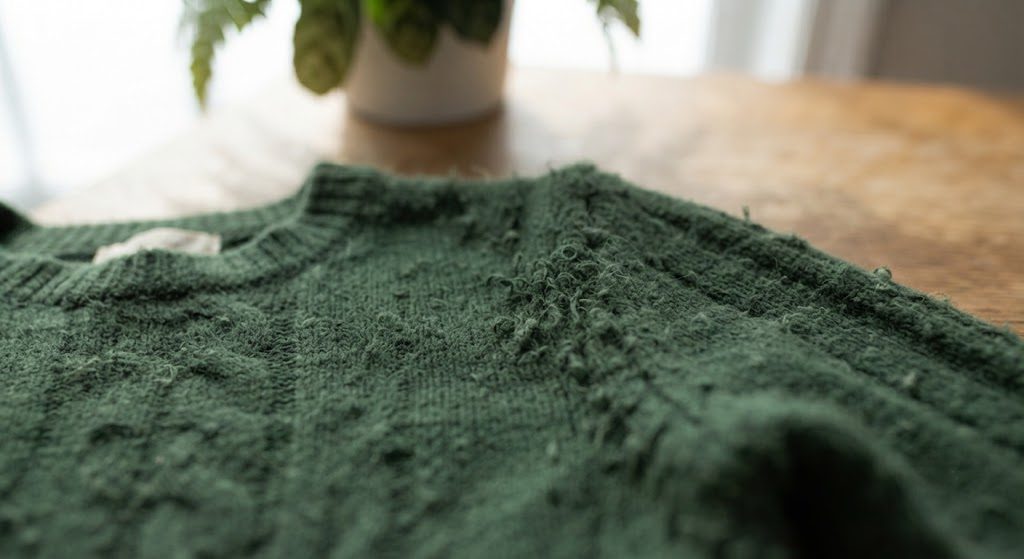
Yarn Twist
After staple length comes twist. Fibers are spun together into yarn, and the tightness of that spin matters enormously. A high-twist yarn compacts the fibers so they can't escape easily. A low-twist yarn feels softer in the store — that cozy, brushed texture — but it unravels with every wash. The softest sweater on the rack is often the one that pills fastest.
Knit Density
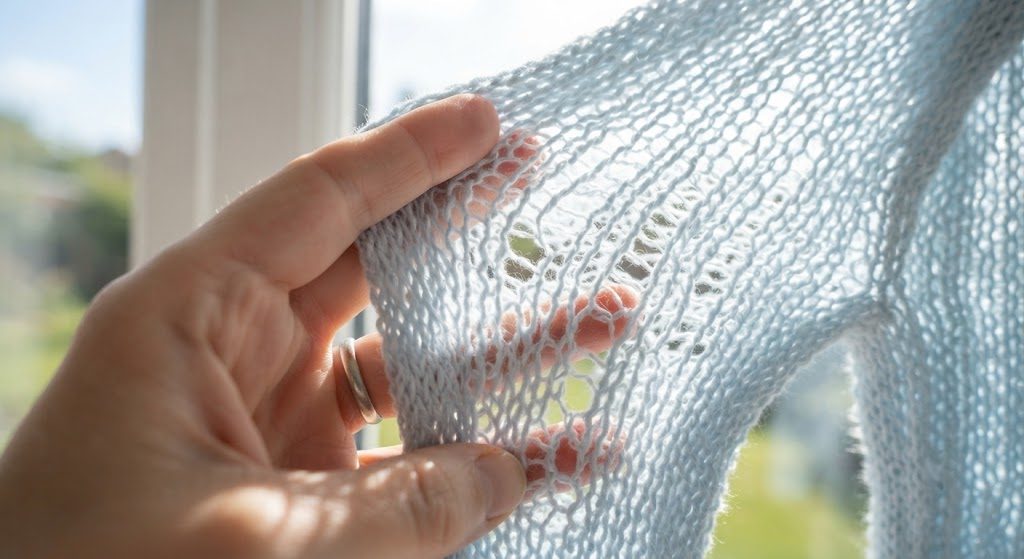
Finally, the fabric's knit structure determines how much surface friction the fibers will endure. A dense, tightly knit jersey has fewer loose loops for tiny hands to catch. A loose, airy knit — common in lightweight "summer cotton" sweaters — exposes every fiber to abrasion. Hold a garment up to the light. If you can see significant gaps between the stitches, those gaps are pill factories waiting to happen.
How to Spot a Pilling-Prone Garment in the Store
You don't need a microscope. Here is my three-step, no-tools-required test that takes under 30 seconds.
The Rub Test
Take a small section of the fabric, fold it over on itself, and rub it together briskly for 10 seconds — like you're trying to start a fire with two sticks. Then inspect the surface. If you see even the faintest fuzz or tiny rolled fiber balls forming, put it back. This replicates the friction of a single car ride.
The Light Test
Hold the fabric up to a light source. Tightly woven, high-density knits let through little light. If the garment glows like a loose net, those airy spaces mean short fibers will rub and tangle easily.
The Label Check
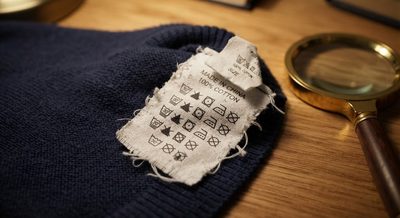
Scan the care tag for fiber specifics. "100% Pima cotton," "Supima," or "long-staple cotton" are good signs. If it simply says "100% cotton" with no origin or variety, assume short-staple unless the weave feels remarkably dense. Also note the country of origin: mills in India and China produce an enormous range of quality, but long-staple cotton is often called out explicitly when used.
What I Buy Instead
After logging over 200 kids' sweaters and cardigans in my spreadsheet, the longest-lived pieces consistently share these traits: long-staple cotton, a tight jersey or interlock knit, and flat-lock seams. They cost between $18 and $45, and they average 45 washes before the first sign of fuzz. The shortest-lived, softest sweaters averaged 6 washes.
That doesn't mean you should never buy a fluffy, brushed-cotton sweater your child adores. Just know what you're trading: softness now, durability later. I've kept a few low-twist knit cardigans in rotation because they're what my sensory-sensitive kid will actually wear. The difference is, I'm no longer surprised when they pill — and I have a fabric shaver in the drawer, ready to gently depill and extend their life a few more wears.
Understanding fabric construction didn't make me an angry shopper. It made me a calmer one. I still make choices based on budget, comfort, and the specific kid. But now I know exactly why something failed — and how to fail less next time.
Travellers Write
No letters yet — be the first traveller to write.